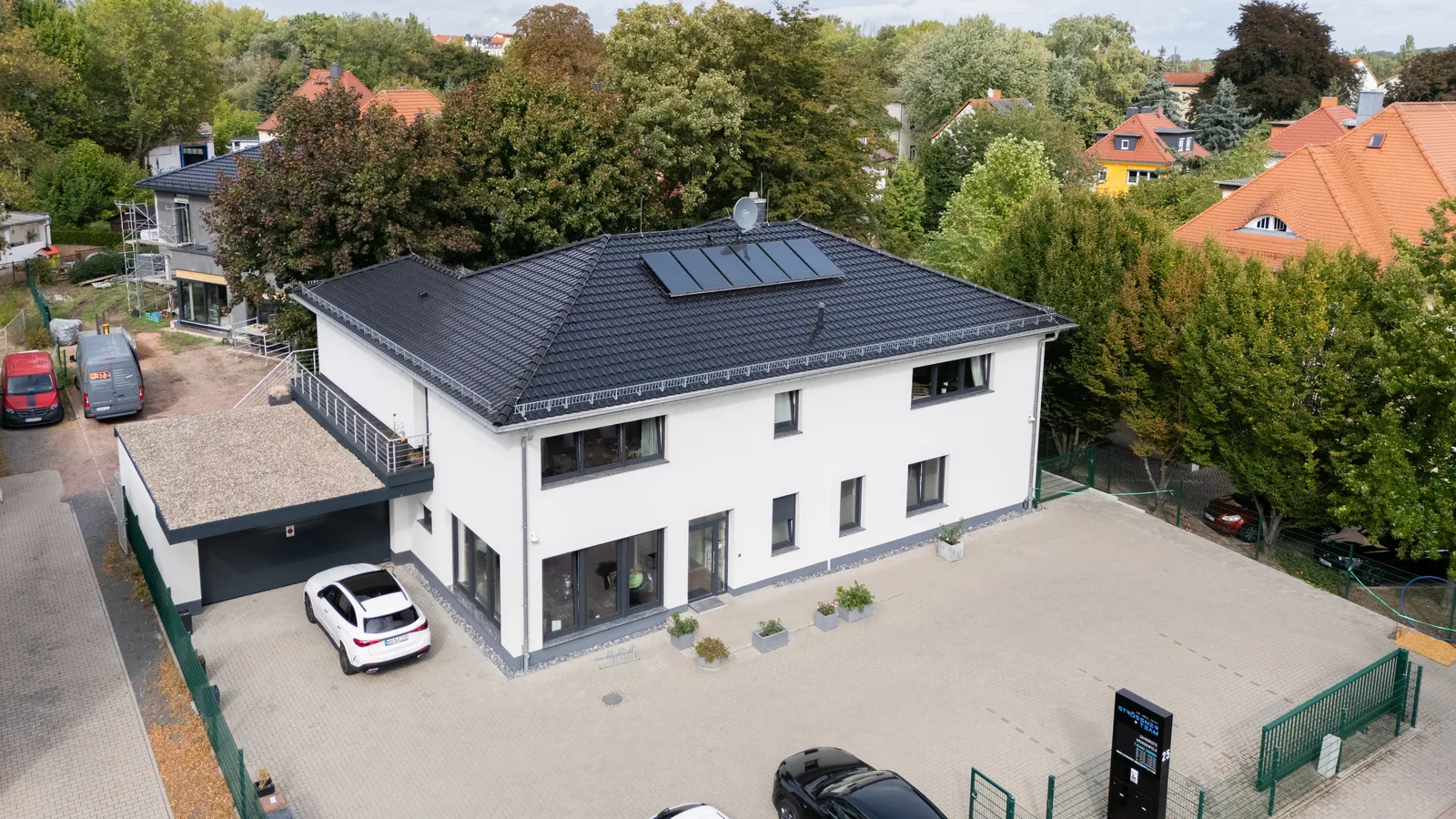
Zahnkompetenzzentrum Burgenlandkreis · Burgenlandkreis

The Zahnkompetenzzentrum for the Burgenlandkreis

Dr. med. dent. M.Sc. Sandro Strößner
Zahnkompetenzzentrum Burgenlandkreis · Burgenlandkreis
51.2017° N · 11.9678° E
MMXXVI · Burgenlandkreis

The essentials in 30 seconds

— Zahnkompetenzzentrum Burgenlandkreis · Weißenfels

Who treats you

Dr. med. dent. M.Sc. Sandro Strößner – working in implantology since 2013 · M.Sc. in Oral Implantology and Periodontology – together with the team at Zahnkompetenzzentrum Weißenfels.

First Appointment

Conversation, medical history and examination (3D X-ray if needed) – planning comes first, treatment follows. A purely informational conversation without an examination is free of charge; examination and treatment and cost plan are billed according to the GOZ (the German scale of dental fees).

Costs

Before every treatment, you receive a written treatment and cost plan showing your own contribution; patients with statutory and private health insurance are treated equally.

First Step

Book an appointment around the clock via our online reception (the “Appointment” button), or by phone during opening hours on 03443 339 65 54.

01 — Professional Society
Member of the German Society for Implantology (DGI)
02 — Listing
Listed with the Leading Implant Centers
03 — Experience
Working in implantology since 2013 · M.Sc. Oral Implantology and Periodontology
04 — Patient Voices
★ 4.9 on Google · 216 reviews
Attitude
The Burgenlandkreis has a long-standing medical tradition – and yet, for many patients, it is a relief to know that they don't have to travel to Halle or Leipzig for more complex dental procedures.
— Zahnkompetenzzentrum Dr. Strößner
01
01 — Diagnostics

Understanding before we act.

Cone-beam CT scan, intraoral scans, structured assessment. The first appointment isn't treatment — it's a conversation backed by data.

Dentist wearing loupes examining a patient
Quiet · 3D Volume Tomograph 01 / 03
02 — Planning

Digitally planned, thought through backwards.

From the final dental prosthesis back to the surgery. What should exist at the end determines the first step — not the other way round.

A digitally captured jaw shown in CAD software on screen
Quiet · Backward Planning 02 / 03
03 — Execution

Minimally invasive, navigated.

Coordinated by one team under one roof. Surgery, prosthetics, laboratory — nothing handed off, nothing lost in translation.

Dental technician's work matching shade using a shade guide
Quiet · Surgical Still Life 03 / 03
01 — Diagnostics
The Principle

Our Focus Areas — Zahnkompetenzzentrum Burgenlandkreis & More.

We cooperate with local regular dentists and document every treatment so that seamless aftercare at your home location is possible. Our aim is to combine high dental standards with the regional closeness and personal care of a local practice.

— scroll horizontally
Explained from everyday practice

Your questions — answered by us.

Short videos in which our team answers the questions we're asked most often. No jargon, no sales pressure.

The videos provide general information and do not replace individual advice or examination. The course and outcome of treatment depend on personal circumstances; medicine offers no guarantee of success. All videos have subtitles.

Care for the District

Clinic-standard care close to home in the Burgenlandkreis – without a long journey

Anyone living in the Burgenlandkreis facing more extensive dental treatment often already knows the question: will I have to travel to a facility further away for this? Many people automatically associate extensive procedures, treatment under sedation (twilight sleep), or a complete restoration of the whole set of teeth with long journeys into a big city. This assumption is understandable, but today it is often no longer necessary. At the Zahnkompetenzzentrum Dr. med. dent. M.Sc. Sandro Strößner in Weißenfels, clinic-level equipment is available that makes demanding treatment possible close to home and on an outpatient basis – right in the heart of the Burgenlandkreis.

The term “clinic-level equipment” describes a clear aspiration: equipment, rooms, and workflows are modelled on what is otherwise familiar from an inpatient setting, without a hospital stay being necessary. You come to our practice in familiar surroundings in the morning and can generally go home again the same day – to your own bed, your familiar surroundings, cared for by people who support you throughout the entire treatment. For many patients, this is exactly what makes a decisive difference.

What care close to home in the Burgenlandkreis actually means

Being close to home is about more than distance in kilometres. It means that the journeys for preliminary examinations, treatment and follow-up check-ups stay manageable. It means that family members can accompany or collect you without a great deal of effort. And it means that, on top of the treatment itself, you do not also have to deal with a long journey, unfamiliar places and unfamiliar contacts. Especially for larger procedures, which already carry a certain amount of tension, this familiarity is a steadying anchor.

The Burgenlandkreis is a predominantly rural district, with many smaller towns and longer distances between communities. A central point of contact in Weißenfels that brings comprehensive care together under one roof noticeably eases these journeys. Instead of travelling to different places for diagnostics, surgery and aftercare, you will find these steps combined in one location. This saves time, avoids friction between different clinicians, and ensures that all information about your treatment comes together in one place.

Further down this page, you can find out which towns in the district we are particularly well placed to serve, which more extensive procedures we offer on an outpatient basis, how treatment under sedation (twilight sleep) or general anaesthesia proceeds, and what equipment we work with. You will also read about the advantages of local, outpatient care and how costs and the involvement of health insurers are arranged.

Locations & Accessibility

Easy to reach from across the Burgenlandkreis: Naumburg, Zeitz, Hohenmölsen and more

Weißenfels has excellent transport links at the heart of the Burgenlandkreis. This means the Zahnkompetenzzentrum can be reached within a manageable time from many places in the region – whether by car, bus or train. Anyone who would otherwise have planned a longer journey for more extensive treatment will find a noticeably shorter distance here.

Our patients come from these towns

The towns and municipalities below belong to the catchment area in which local care in Weißenfels represents, for many people, a sensible alternative to a long journey. The travel times given are rough guide figures and naturally depend on the time of day and traffic conditions:

  • Naumburg (Saale) – the cathedral town in the south of the district, well connected via main roads and by rail
  • Zeitz – a manageable drive from the south-east of the Burgenlandkreis
  • Hohenmölsen – especially close by as a direct neighbouring town
  • Lützen – conveniently reached from the north of the district
  • Teuchern – centrally located in the district and so well connected
  • Bad Dürrenberg – well connected from the north-east of the region
  • as well as surrounding communities such as Goseck, Leißling, Markwerben and other districts around Weißenfels

Getting here by car, train and bus

By car, you can reach Weißenfels via the main roads that cross the district, as well as via the nearby motorway connection. Parking is available in the immediate vicinity of the practice, so the distance from arrival to the treatment room stays short. This is especially helpful if you are being picked up after treatment under sedation (twilight sleep) – your companion can easily pull up nearby.

Getting here is easy even without your own car. Weißenfels is connected to the regional rail network, and the practice can be reached within a short time from the station. Anyone travelling by public transport should be sure to arrange for someone to accompany them on the day of sedation or general anaesthesia, as travelling home independently afterwards is not possible. We go into this point in more detail further below.

If you're unsure of the best way to get to us, or how to organise the day of your treatment, just ask us. Our team will advise you by phone on 03443 339 65 54 and help you plan your journey and any accompanying person sensibly.

Larger Procedures, Outpatient

Larger procedures and full-mouth rehabilitation – outpatient, in a single day

Many dental procedures that used to automatically involve a hospital stay can now be carried out on an outpatient basis. This is made possible by careful preparation, clinic-standard equipment, and a well-practised team. Outpatient means: you arrive at the practice at the agreed time, are treated, and, after an appropriate period of monitoring and recovery, can go home the same day. An overnight stay in a facility is not required in many cases.

What extensive treatments are possible close to home

The range of more extensive procedures that can be offered on an outpatient basis at the Zahnkompetenzzentrum is broad. Which treatment makes sense and can be safely carried out in an individual case always depends on your personal situation, your state of health and the dental findings. We make this assessment together with you after a thorough preliminary examination. Treatments that are often carried out on an outpatient basis, close to home, include:

  • placing one or more dental implants
  • Bone augmentation to create a stable implant site
  • surgical removal of displaced or impacted teeth, such as wisdom teeth
  • Apicoectomies and other oral surgery procedures
  • the gradual or combined treatment of several teeth in one session
  • implant-supported dental restorations as part of comprehensive treatment

Full-mouth rehabilitation: many steps sensibly combined

Full-mouth rehabilitation refers to the comprehensive restoration of a set of teeth in significant need of treatment. This often involves several measures coming together – such as the removal of teeth that can no longer be saved, necessary bone augmentation, the placement of implants, and the subsequent prosthetic restoration. Such rehabilitation cannot be completed overnight; it follows a carefully considered plan that coordinates the individual steps sensibly and takes healing phases into account.

The advantage of care under one roof is especially clear with a full-mouth restoration. Diagnostics, planning, surgery and dental prosthetics all interlock, without you having to travel between different places. Where it is justifiable and more comfortable for you, several treatment steps can be combined into a single session – under sedation, for example. In many cases, this can reduce the number of separate appointments, which can be a noticeable relief particularly for people travelling further from within the district.

An honest assessment matters to us here: not every treatment is suitable for every person on an outpatient basis. If particular pre-existing conditions or risk factors are present, we discuss openly which approach is safest – and, if necessary, refer you to specialised colleagues or an inpatient facility. Your safety always comes before the wish to have as much as possible done in one place.

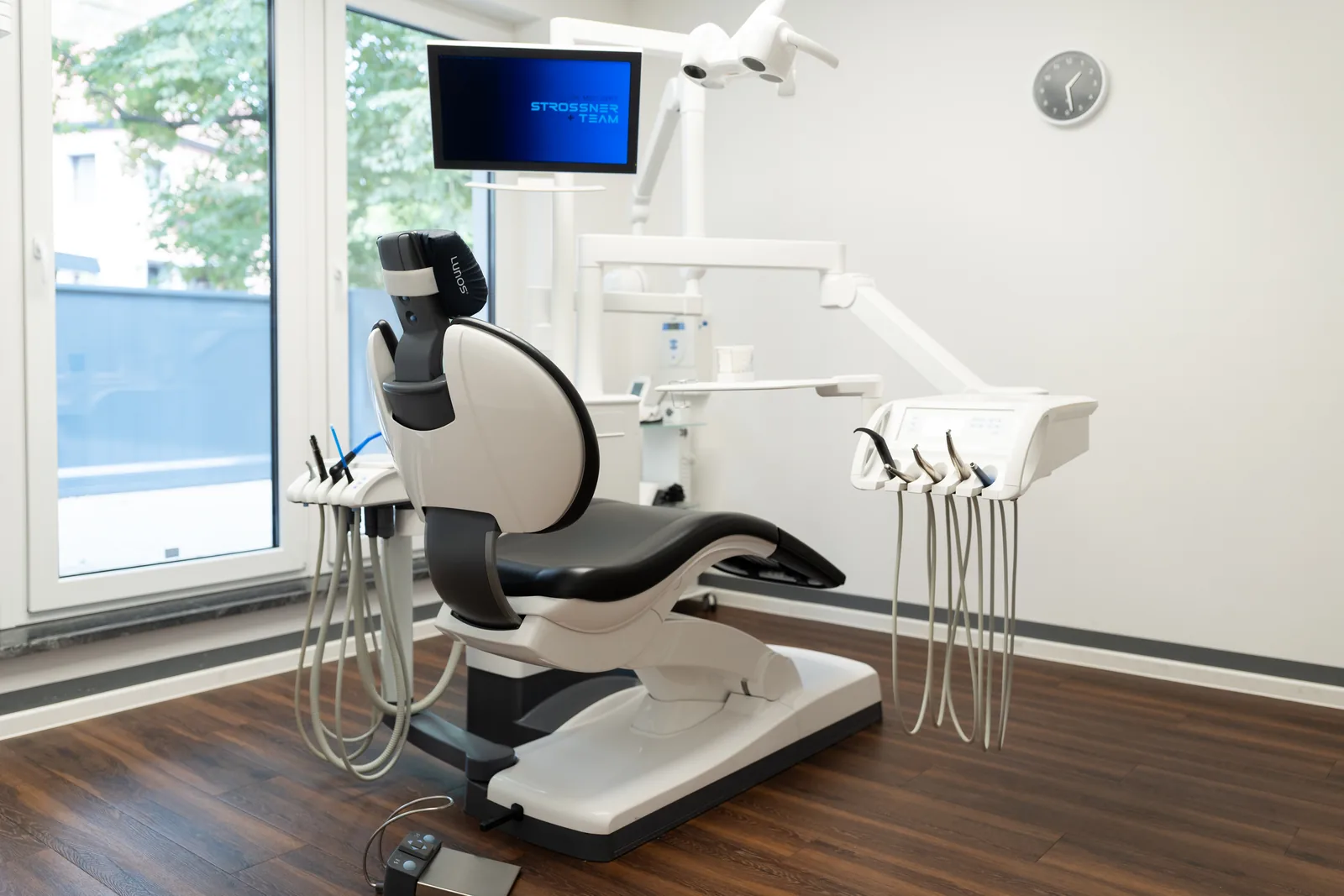
Sedation & General Anaesthesia

Sedation and General Anaesthesia with Our Own Anaesthesia Team

A key element of our clinic-standard care is the option of having larger procedures, or ones felt to be stressful, carried out in a state of deep relaxation or under sedation. To provide this, the Zahnkompetenzzentrum works together with a qualified anaesthesia team. While we concentrate on the dental treatment, the anaesthesia team continuously monitors your circulation, breathing and wellbeing. This clear division of tasks creates the conditions for even more extensive procedures to proceed calmly and under control.

Treatment Under Sedation (Twilight Sleep)

With sedation – often referred to as twilight sleep – medication is used to bring you into a state of deep relaxation. You are aware of little or nothing of the treatment, but continue to breathe independently. Many patients find this form of treatment very pleasant, because tension, the gag reflex and the subjective sense of time all fade into the background. After the procedure, there follows a monitoring phase during which the effect gradually wears off.

General anaesthesia for extensive or particularly demanding procedures

Under general anaesthesia, you are in a controlled deep sleep and are unaware of the entire procedure. In dentistry, it is not used lightly, but is considered when medically sensible – for example, for very extensive procedures, pronounced dental anxiety, or for people for whom treatment while awake would not be reasonable. The decision in favour of general anaesthesia is always made together with you and the anaesthesia team, after careful consideration.

Who sedation or general anaesthesia may be an option for

  • People with pronounced fear of dental treatment
  • extensive procedures that would feel stressful if carried out while awake
  • a pronounced gag reflex that makes relaxed treatment difficult
  • Patients who want to combine several treatment steps into one session
  • particular situations where staying still and calm for longer periods is difficult

Before any sedation or anaesthesia, a detailed consultation and briefing takes place. Your medical history, current medications, and possible risks are discussed. You will receive clear instructions on how to prepare – for example, on fasting before the procedure – and what to be aware of afterwards. Because you are not permitted to drive yourself after sedation or anaesthesia, and should not be alone for a few hours, an adult companion is essential. Please plan for this well in advance.

Exactly how treatment with sedation or general anaesthesia proceeds at Zahnkompetenzzentrum is described step by step further down, in the section on the treatment process.

Facilities

Clinic-standard equipment: technology and rooms for demanding procedures

For larger procedures to be carried out safely on an outpatient basis, more than manual skill is needed. What is needed is equipment geared to the demands of complex treatment. This is exactly what the term clinic-standard equipment means at the Zahnkompetenzzentrum: devices, hygiene and workflows are designed so that even complex treatments are possible with the necessary care and safety – without requiring a hospital stay.

Three-Dimensional Diagnostics and Digital Planning

Sound planning begins with sound diagnostics. 3D X-ray (cone-beam CT) makes it possible to visualise the jawbone, nerve pathways and anatomical features in three dimensions. This is especially valuable for implant placement and bone augmentation, as the procedure can be planned on screen in advance, before it takes place. Digital scanning and computer-assisted planning complement this approach and help to plan the eventual treatment outcome working backwards from the goal.

Treatment rooms and monitoring for sedation and general anaesthesia

Appropriately equipped rooms are available for treatment under sedation or general anaesthesia. These include equipment for continuously monitoring circulation and breathing, the anaesthesia team's equipment, and a quiet area for the recovery period after the procedure. These structures form the basis for you to feel well looked after during and after treatment.

Hygiene and Safety as a Matter of Course

In surgical procedures, adherence to strict hygiene standards is the top priority. Instrument reprocessing, sterile working areas, and clearly defined procedures follow the applicable requirements. This care takes place behind the scenes, but for patients it is a crucial safety factor – even if often invisible.

  • three-dimensional X-ray diagnostics (cone-beam CT) for spatial assessment of the jaw
  • digital impressions and computer-assisted treatment planning
  • Treatment Rooms for Oral Surgery
  • continuous monitoring of circulation and breathing during sedation and general anaesthesia
  • a quiet area for the recovery and monitoring phase
  • Reprocessing and sterilisation according to current hygiene requirements

However, technology alone does not treat anyone. Equipment is a means to an end – it supports the people who work with it. What matters is the interplay of experienced treatment, a well-practised team, and an environment in which you feel taken seriously. It is precisely this interplay that defines local, clinic-standard care within the Burgenlandkreis.

Your Benefits

Advantages of outpatient care close to home

The combination of clinic-standard facilities, a location close to home, and an outpatient approach brings a number of concrete advantages for patients from the Burgenlandkreis. These concern not only the procedure itself, but the whole journey from the first consultation through to completed aftercare.

What outpatient care close to home means for you

  • short journeys: no long trip to a distant facility, but treatment in your familiar home region
  • Recovering at home: in many cases, returning to your own familiar surroundings the same day, rather than staying overnight in an unfamiliar facility
  • one point of contact: diagnostics, planning, the procedure and aftercare, at one location and from a single source
  • continuous care: the same familiar people accompany you throughout the entire treatment
  • less stress: familiar surroundings and short journeys can help reduce the tension around larger procedures
  • easy to accompany: family members can bring you, stay with you and pick you up without much effort
  • bundled appointments: where sensible and appropriate, several steps can be combined into a single session

Especially helpful for older people and those with limited mobility

Being close to home is a genuine advantage, particularly for older patients or people with limited mobility. A long journey to a facility far away can, in itself, already represent a significant burden – regardless of the procedure itself. Local care within the Burgenlandkreis reduces this additional hurdle and makes it easier for relatives to accompany and support you.

Honest context, not exaggerated promises

Convincing as these advantages are, we do not want to overstate them. Whether treatment can be provided on an outpatient basis close to home always depends on the individual case. In some situations, inpatient care or referral to a specialist facility is the better and safer route. We reach this assessment together with you after a thorough examination, and we openly state where the limits of outpatient care lie. Honest advice matters more to us than a sweeping promise.

Process

How your treatment works – step by step

A larger course of dental treatment feels less daunting when you know what to expect. That's why we describe here the typical path from the first contact through to completed aftercare. The specific process naturally depends on the particular treatment, but the steps below give you reliable guidance:

  1. Initial contact and booking an appointment: Call us, or arrange an appointment for an initial conversation at Zahnkompetenzzentrum.
  2. Examination and diagnostics: We build a precise picture of your situation, using three-dimensional X-ray diagnostics if needed, and discuss your findings with you in a clear, understandable way.
  3. Consultation and treatment plan: Together, we determine which treatment makes sense, whether it can be carried out on an outpatient basis, and whether sedation or general anaesthesia is an option.
  4. Explanation and cost plan: You receive a thorough explanation of the planned procedure, along with a written treatment and cost plan.
  5. Preparing for treatment day: If sedation or general anaesthesia is planned, you receive clear instructions on fasting, medication, and the need for someone to accompany you.
  6. The procedure: On the day of treatment, the procedure is carried out – if needed under sedation or general anaesthesia, accompanied by the anaesthesia team.
  7. Monitoring and recovery: After the procedure, you stay in a quiet area until the effects of the sedation or general anaesthesia have worn off sufficiently.
  8. Travelling home with company: As soon as your condition allows, you can usually go home the same day – collected by the person accompanying you.
  9. Aftercare and check-ups: Over the following days and weeks, we support the healing process with check-up appointments and remain available for your questions.

We're here for you after the procedure too

Treatment does not end when you leave the practice. For us, careful aftercare is an inseparable part of it. You will receive specific guidance for the time after the procedure – on cooling, diet, oral hygiene and pain relief, for example. Should any questions or problems arise between check-up appointments, you can reach us by telephone on 03443 339 65 54. This is exactly where living nearby pays off: if a short-notice check-up is needed, the journey to us is short.

Costs & Insurance

Costs and insurance cover explained clearly

One of the most common questions before more extensive treatment concerns cost. That is understandable, as extensive procedures, dental prosthetics, and treatment under sedation or anaesthesia can add up to a noticeable amount, depending on their scope. We think it is only natural that, before making a decision, you should know what costs to expect and what share of them your health insurer will cover. Flat-rate amounts cannot responsibly be given here, because every treatment is individual – but we create clarity before treatment begins.

Statutory Health Insurance and Fixed Subsidies

For patients with statutory health insurance, the insurer covers part of the cost in the form of fixed subsidies, particularly for dental prosthetics. The amount depends on the findings and can be increased through a dental bonus booklet (Bonusheft) kept up to date without gaps. Certain services – such as higher-value dental prosthetics, implant-supported restorations, or treatment under sedation or general anaesthesia without a compelling medical need – go beyond the statutory insurers' scope of cover and are then billed privately.

Privately Insured Patients and Supplementary Insurance

For privately insured patients, the extent of reimbursement depends on the particular tariff. Anyone with statutory health insurance who has also taken out supplementary dental insurance may, depending on the policy, have part of the privately payable costs reimbursed. Before major treatment, we recommend checking with your insurer which services are covered and to what extent – our written treatment and cost plan provides a helpful basis for this.

Transparency before treatment begins

Before more extensive treatment begins, we provide you with a written treatment and cost plan. This sets out the planned services, the anticipated personal contribution, and the subsidy from your health insurer in a clear, comprehensible way. This allows you to make your decision calmly – if needed, also after consulting your insurer. On request, we are also happy to discuss possible instalment payments or financing options with you openly.

A flat-rate price cannot be given for larger procedures, full-mouth restorations, or treatment under sedation or general anaesthesia, as costs depend heavily on the individual findings and scope. Before every larger treatment, you therefore receive a written treatment and cost plan with a transparent breakdown of your own contribution and your insurer's subsidy. We are happy to work out together with you which services your statutory or private health insurer covers. Call us for a no-obligation consultation: 03443 339 65 54.

Portrait Dr. med. dent. M.Sc. Sandro Strößner
Dr. med. dent. M.Sc. Sandro Strößner

Clinical quality – rooted in the region

The Burgenlandkreis has a long-standing medical tradition – and yet, for many patients, it is a relief to know that they don't have to travel to Halle or Leipzig for more complex dental procedures. Our dental practice in Weißenfels offers clinic-standard facilities and a comprehensive range of services right here in the region.

Patients from Naumburg, Zeitz, Hohenmölsen, Lützen or Bad Kösen reach us within 15–30 minutes. With us, you'll find full-mouth restoration under general anaesthesia, All-on-4, complex implantology and oral surgery – all on an outpatient basis, with short journeys and personal care.

Dr. med. dent. M.Sc. Sandro Strößner — Weißenfels, MMXXIII
— Practice Video · 02:14 Weißenfels / Sachsen-Anhalt
00:00
02:14

Voices that have stayed.

— Excerpts from patient conversations
01 — Voice

What convinced me was the absence of marketing. No promises. Just planning, explanation, execution. I had eight implants placed and didn't even feel like I'd made a difficult decision.

— A. H. · written patient feedback, held on file at the practice
02 — Voice

I was an anxious patient for fifty years. Today, I am no longer one. Not because my anxiety has disappeared, but because this team took it seriously, without ever making a drama out of it.

— K. M. · written patient feedback, held on file at the practice

Questions, answered calmly.

— Before your first appointment
No. The Zahnkompetenzzentrum Dr. med. dent. M.Sc. Sandro Strößner is a dental practice with clinic-standard facilities. This means that equipment, rooms and workflows are designed so that even larger procedures can be carried out safely on an outpatient basis – without requiring an inpatient stay.
In many cases, no. Numerous extensive treatments can now be carried out locally and on an outpatient basis in Weißenfels. Whether this is possible in your case depends on the findings and your state of health, and is decided together with you after a thorough preliminary examination.
Weißenfels is centrally located within the district and can be reached in a manageable time from, among other places, Naumburg, Zeitz, Hohenmölsen, Lützen, Teuchern and Bad Dürrenberg, as well as the surrounding municipalities – by car, train or bus.
Outpatient means that you come to the practice at the agreed time, are treated, and after an appropriate period of monitoring and recovery, can generally go home again the same day. Staying overnight at a facility is in many cases not necessary.
With sedation (twilight sleep), you are deeply relaxed and breathe independently, but are barely aware of the treatment. With general anaesthesia, you are in a controlled, deep sleep and are not aware of the procedure at all. Which form makes sense is something we discuss together with the anaesthesia team.
For treatments under sedation or general anaesthesia, we work together with a qualified anaesthesia team. While we carry out the dental treatment, the anaesthesia team continuously monitors your circulation, breathing and wellbeing.
Yes, that is essential. After sedation or anaesthesia, you must not drive yourself and should not be alone for several hours. Please arrange, in good time, for an adult to accompany you, pick you up, and support you at home.
A comprehensive restoration generally follows a multi-stage plan that takes healing phases into account. Where it makes sense and is justifiable, several steps – for example, under sedation – can be combined into a single session. This can reduce the number of appointments, but is not possible in every case.
These include, among others, placing implants, bone grafting, the surgical removal of wisdom teeth, apicoectomies, and the step-by-step restoration of several teeth. Whether a specific procedure is suitable for outpatient treatment is something we decide together with you after examination.
Statutory health insurance covers part of the cost in the form of fixed subsidies, particularly for dental prosthetics. Higher-value or implant-supported restorations, as well as sedation without medical necessity, are billed privately. Before any more extensive treatment, you receive a written treatment and cost plan.
A blanket figure isn't possible, as the cost depends heavily on your individual findings and the scope of treatment. Before treatment begins, you receive a transparent, written treatment and cost plan that clearly breaks down your out-of-pocket share and the insurer's subsidy. We are happy to discuss instalment payment with you on request.
Around the clock via our online reception (the “Appointment” button) or by phone during opening hours on 03443 339 65 54. In the first conversation, we build up a picture of your situation, advise you on the options, and clarify whether local, outpatient care is an option for you – with no obligation and no time pressure.

Anonymous Self-Test · 2 Minutes

How great is your fear of the dentist?

Many people put off visiting the dentist for years because of anxiety — and you are not alone in this. This short self-test gives you an honest initial assessment and shows you which options could make your next visit noticeably easier.

  • 5 short questions, done in 2 minutes
  • Runs entirely on your device — no storage, no cookies, no tracking
  • Based on the scientific MDAS scale
A Beginning

One appointment. One conversation. And you'll notice the difference.

Book an appointment
Call
Appointment
Everything in one placeAppointments, questions, etc.